Khalil Khani, PhD
The uprising of the Iranian people in January 2026, which was carried out with the slogan emphasizing on, No2ShahNo2Mullahs, was suppressed in the most severe manor. The mass media estimates the number of dead at a terrifying figure of up to 20,000 people and perhaps more. Of course, the supreme leader and his officials of Iran’s religious fascism acknowledged such a massacre. As the supreme leader of the religious criminal regime appeared on state television and said: We have silenced the sedition, but it is not enough, repeating it three times.
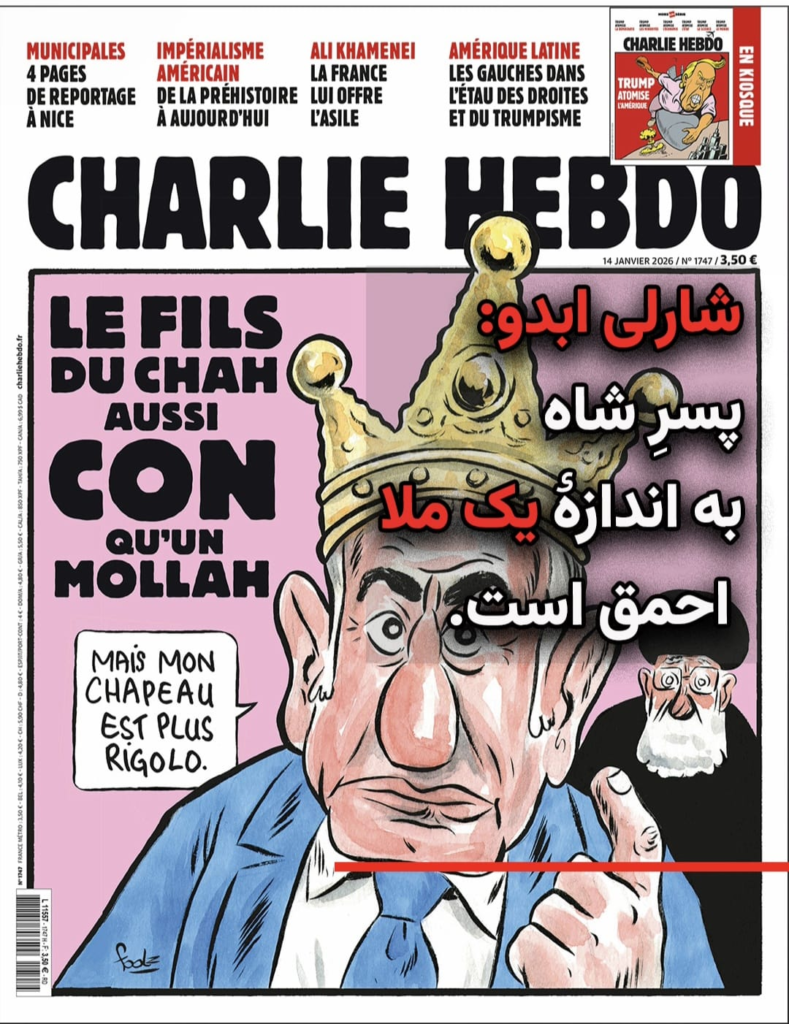
In this situation, the factory of fake alternatives of the mullahs’ regime and some foreign special interests, media and supporters of the mullahs’ rule were at the service of the regime, to create leaders with the regime made video clips or known groups for the uprising of the Iranian people, with slogans such as: Javid Shah, Reza Shah, may your soul be happy and Pahlavi will return. The present article attempts to examine this issue in detail.
Analyzing the slogans of Javid Shah and Reza Shah, “May you be happy,” requires a multifaceted look at the political climate, social psychology, and strategies for the survival of the clerical regime in Iran. Many analysts believe that slogans of this kind, despite being uttered out of anger or frustration with the status quo, ultimately end up benefiting the current mullahs’ rule.
False polarization, choosing between bad and worse: The criminal mullahs’ rule always tried to put society in a situation where there are only two options; the status quo or a return to the past. When slogans turn toward absolute praise of the Pahlavi era, the clerical tyranny uses it to intimidate segments of society that may have an angle with the Velayat-e-Faqih but are also afraid of going back. This causes the gray layer of Iran’s society that seek forward changes to stay with the system or remain silent for fear of supporting radical organized resistance, blind revenge, or a repetition of the old tyranny.
Creating divisions in the ranks of the opposition: Javid Shah’s slogan automatically negates a large and important portion of the opponents of the clerical rule, such as serious fighters against them, republicans, nationalists, communists, ethnic minorities and pluralists. This slogan causes discussions to move towards the purification of the dictatorship of the past, instead of focusing on its clerical fascism overthrow or a democratic future. The clerics enjoy this division, because as long as the opponents fight over the type of government in the future, there is no serious threat to the current one.
The fundamental flaws of the monarchist perspective and its slogans:
Reducing demands to a false memory rather than a program; the slogan, Reza Shah, may your soul rest in peace, is born of a bitter history, not a political program for the 21st century. Instead of offering solution for the economy, complex international relations, and environmental crises, this slogan appeals to a memory. The regime uses this tool to throw dust on the rightful resistance of the Iranian people and the real solution offered by the National Council of Resistance of Iran and the People’s Mojahedin, and to pretend that the opponents of its regime are foreign agents or supporters of the overthrown dictator, who are more reactionary than itself and have no program for modern governance of the country.
Instigating fear among the executive and military bodies of religious fascism: Many in the government or armed forces may have an angle on the existing government, but when the slogans are return to a system that sees them as the enemy, they are not reluctant to defend the current system for fear of their lives and positions. However, more inclusive slogans that emphasize justice and democracy make it easier for the power structure to collapse.
To overthrow totalitarian and self-centered regimes, there are various strategies that are used according to the time and place. A strategy often called reconciliation with the armed forces is actually a double-edged sword in the current Iranian situation. While its aim is to encourage separation from the regime, many critics and victims of the current regime see it as a strategic error or even a betrayal of justice. Here is an analysis of why this approach exists and why it remains deeply problematic for many.
Velvet Transition Strategy: The argument advanced by proponents of this approach, including Reza Pahlavi, is based on the theory of nonviolent resistance. The basics of this strategy are as follows:
Preventing a power vacuum: They argue that if the entire repressive military and security apparatus, such as the IRGC, Basij, and the police force, collapses, Iran could face a civil war or in a situation such as Syria.
Such a view, impunity for the murderous and repressive force, is in the interests of the clerical tyranny. Despite the intention to weaken the regime, this rhetoric can help the incumbent authorities stay in power for various reasons. Giving this direction causes the loss of moral authority of this view. When an opposition leader promises that the Basij and IRGC, which are responsible for the deaths of protesters, will remain intact, he alienates the families of the regime’s victims and the revolutionary youth. This creates a gap between the self-proclaimed leader abroad and the streets at home. Of course, most members of the IRGC and Basij certainly do not believe these promises. They see it as a trap or a political show. As a result, it does not actually cause the desired mass exodus, but it does succeed in making the opposition appear weak or willing to compromise with the oppressors. By suggesting that these forces are merely deceived brothers who provide security, it whitewashes their oppression and committed crimes against humanity and minimizes the severity of their crimes. This leads to a sense of alienation among those who want fundamental structural change, not just a change in the person at the top of power.
The logic is that if a police commander or a riot police officer knows that tomorrow he will be executed or lose his home, he will fight to the death today. The promise of immunity or integration into the future security force will not persuade them to lay down their arms.
The truth is that the security forces of the criminal mullahs’ regime are afraid of the people, not of the political leaders. They know very well that in the event of collapse, a promise made by a politician in Washington or Europe cannot protect them from the wrath of a neighbor whose child has been killed. Of course, it should be noted that the IRGC is not just an army protecting the Supreme Leader; it is also an economic empire. Even if their lives are saved, they will lose billions in assets, which is why they remain loyal to the Supreme Leader who guarantees their wealth.
Many experts believe that in order to move beyond a totalitarian regime, society needs future-oriented and inclusive slogans, such as: Women, Resistance, Freedom. Slogans that focus on civil rights, freedom, and justice have more potential to unite all segments of Iran’s politically diverse society and pave the way for the dismantle of totalitarian rule.
If the goal is to end dictatorship, how can one promise to preserve the instruments of that dictatorship, the Revolutionary Guard Corps and the Basij, to enforce order in the future?
This is why many activists argue and believe that Reza Pahlavi’s slogans and strategies are a gift to the clerical regime and serve to prolong its life. This shows that the new system proposed by Reza Pahlavi will be very similar to the old system, Velayat al-Faqih, with different symbols. This prevents the formation of a truly democratic and popular alternative that seeks to completely dismantle religious fascism.
The promise of immunity to these elements of the Iranian people’s repression is a cold, Machiavellian calculation, but it carries the risk of sacrificing justice. For a movement built on the cry of justice and equality, the promise of keeping the executioners in power as guardians of the future order is seen by many as a fundamental betrayal, reinforcing the regime’s argument that there is no better alternative. A significant part of the Iranian political spectrum, especially those who believe in a fundamental break with all forms of authoritarianism, past and present, agrees with this.
At the moment, the heart of the debate is about the legitimacy and role of Reza Pahlavi’s camp. Let us examine the mechanics of this criticism: The argument of cooperation with the Supreme Leader’s rule versus the transition to a free Iran; the suspicion that he is not an alternative but a kind of collaborator with the clerical rule stems from the rhetoric about preserving the totalitarian system promoted in the Emergency or Passage booklet. When one advocates for the preservation of the IRGC or the Basij, critics argue that they are not seeking a revolution, a complete structural change, but rather a change of name. Some analysts argue that this strategy is a kind of shadow cooperation or division of labor that, by promoting stability and nonviolence to the point of shielding the repressive arms of the regime, effectively serves as a safety valve for the current system. This provides a way for the regime’s middle management to survive, effectively preventing the complete dismantling of the security state.
Media propaganda and artificial alternatives:There is often a huge gap between the version presented by the reactionary-colonial media of Man-o-to and Iran International and the reality of people’s feelings on the streets of Sistan, Kurdistan, Azerbaijan or the poor and working-class areas of Tehran or elsewhere.
The search for a strongman: some Western think tanks prefer a centralized figure with whom they can negotiate, rather than a decentralized, democratic and pluralistic movement. This often leads to the promotion of a single leader through the media, regardless of their real popular support inside Iran.
The accusation of political charlatanism against the Reza Pahlavi ’s camp: The label of charlatanism is often used by critics because of the contradictions observed in Reza Pahlavi’s manifesto or emergency booklet.
Democracy versus monarchy: Claiming to be a democrat while holding the title of prince and instructing his followers to use the slogans of absolute loyalty to the Javid Shah is seen as a double standard, in complete contradiction to the Iranian people’s demand for justice and equality.
Human rights versus oppressive immunity: One cannot claim to support the women’s movement, life, and freedom, while simultaneously promising impunity to the same forces that killed Mahsa Amini, Nika Shakarami, and thousands of others. This is seen by many as an opportunistic and cynical play for power rather than a principled stand for justice.
Given the points made, Reza Pahlavi is not a real alternative to clerical rule, but rather a highly engineered alternative. His role serves to distract Iranians rising up against the oppressive clerical regime. The experience of returning to Pahlavi tyranny prevents the formation of a broad coalition of ethnic minorities Kurds, Baluchis, Turks, leftists and liberals. The main point is that the clerical regime itself makes the most of Reza Pahlavi as leader to promote its supporters; what? You see? If we leave, the buried monarchy under American support will return for revenge. This helps the regime consolidate its loyalist base. Also, this will motivates the clerical fascism to do more executions under the logo of foreign spy of its opponents.
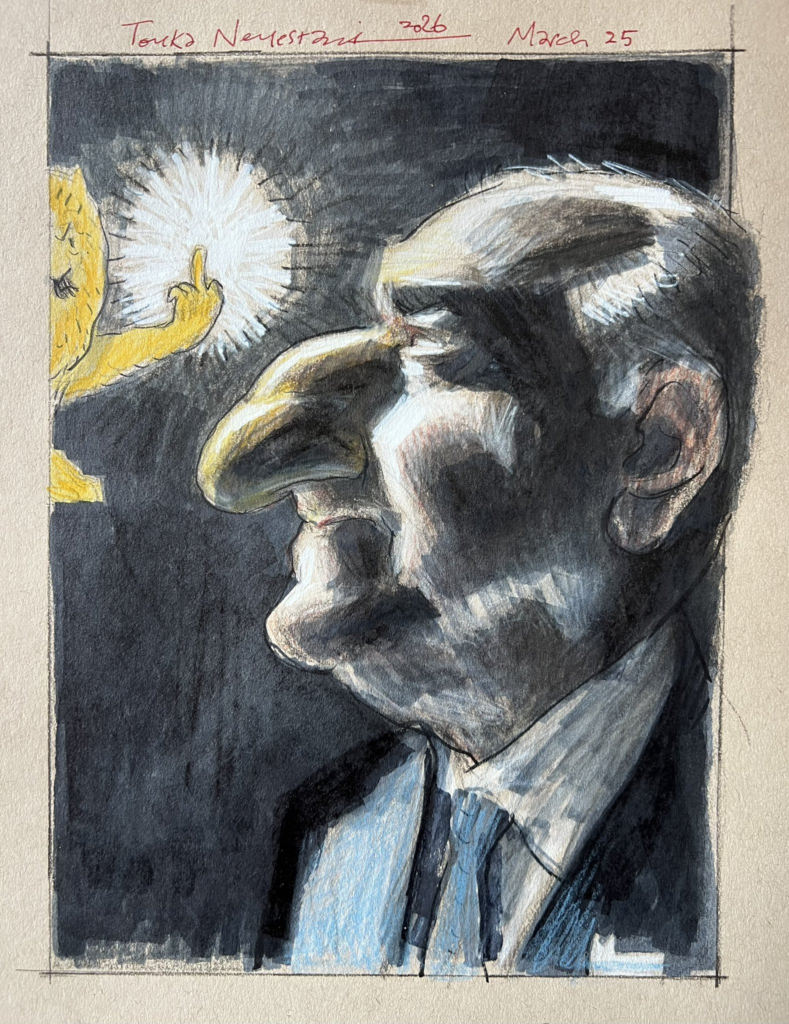
Beyond all said, there is a real alternative in Iran, which is organizing a major uprising to overthrow the clerical regime. This alternative relies on the power of the Iranian people; it is made up of labor unions, the women’s movement, intellectuals, and ethnic minorities who want a democratic republic, with announcement of a provisional government, libration army, its resistance units, and a woman leadership. Rather, it does not come from a return to any form of individual rule; a shah or a sheikh. In this sense, any figure who tries to negotiate with the Revolutionary Guards, the Basij, the police, and the intelligence services is essentially trying to inherit the crown, throne, and turban of repression all together, not to destroying it.
The current government in Iran is used two simultaneous strategies in the face of this major uprising. Violent repression, arrests, torture, and executions of activists and protesters, and war. Also, a strategy of superficial skinning. An attempt to present a version of women’s liberation, changing the tone on the hijab in some forums to show that it can cope with the new life of society without changing its nature. This is exactly the same thing as deviance, i.e. turning a disruptive movement into a formality reform, and it must be exposed.
**Khalil Khani is an Environmental Scientist and Human Rights Advocate.