Ali Bagheri, Ph.D., Senior Research Engineer, Brussels, Belgium
Abstract
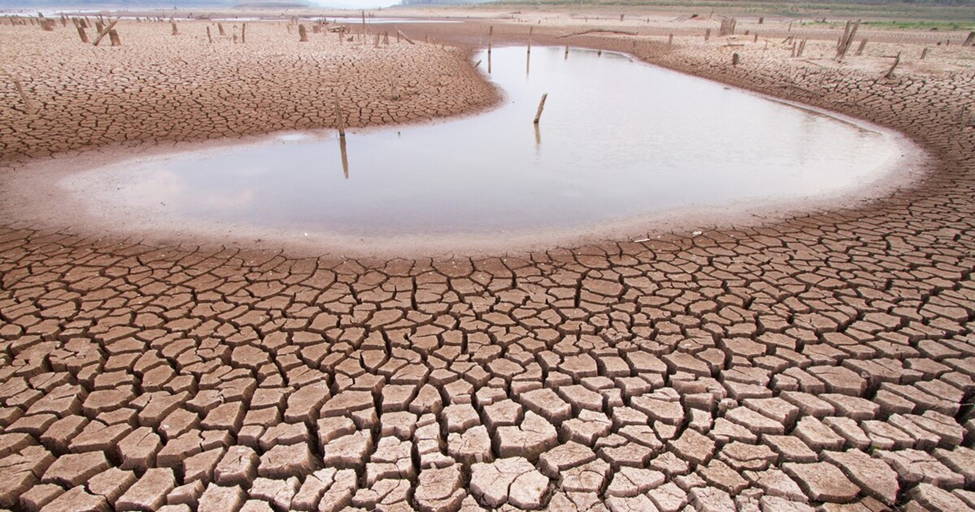
Iran faces one of the most severe water crises in the Middle East. While its arid climate naturally limits renewable resources, decades of centralized mismanagement, politically motivated megaprojects, and neglect of ecological limits have turned scarcity into systemic collapse. This paper analyzes the historical, political, and institutional roots of Iran’s water insecurity. It shows that government decisions prioritizing control and megaprojects over sustainability and participation have depleted the country’s hydrological base. Comparative evidence demonstrates that the crisis is man-made, resulting from governance failure rather than nature.
1. Introduction
In the 1960s, Iran’s renewable freshwater exceeded 4,000 cubic meters per person annually. By 2024 it had fallen to about 1,500 to 1,700, meeting the Falkenmark “water-stress” threshold of 1,700 cubic meters per capita [1]. Projections indicate a decline to roughly 820 cubic meters by 2025 [2]. The global average remains near 6,000 cubic meters [1,2]. Although droughts and climate change intensify scarcity, most studies identify policy mismanagement, corruption, and short-term planning as primary causes [3–5]. Massive dam construction, inter-basin transfers, groundwater depletion, and inefficient agriculture have produced chronic overextraction and declining resilience [6].
2. The Legacy of Megaprojects
2.1 Large Dams and Hydrological Overreach
Since the 1960s, more than 600 dams have been constructed under national modernization and self-sufficiency programs [7]. Many projects ignored geological or ecological constraints. Gotvand Dam, built on salt-bearing formations, created a hypersaline reservoir that contaminated downstream agriculture [8]. Major reservoirs such as Lar and Latyan, critical to Tehran, often operate far below capacity, partly due to sedimentation and evaporation losses [9]. UNESCO’s global water assessment estimates 20 to 30 percent storage loss in arid-region reservoirs from these processes [10]. Instead of stabilizing supply, overbuilt storage has encouraged expansion of water-intensive agriculture and increased overall consumption [11].
2.2 Inter-Basin Transfers and Regional Inequities
Iran has built several large inter-basin water transfer systems, notably from the Karun and Dez rivers to Isfahan and Yazd provinces [12]. These schemes were meant to support industry and urban growth in dry regions but have degraded donor basins, particularly Khuzestan, causing desertification and biodiversity loss [13]. Research shows that such transfers “redistribute scarcity rather than resolve it,” aggravating ecological imbalances and regional tensions [14]. Khuzestan has repeatedly seen protests against diversions that deprive local communities of water and worsen dust storms [15].
3. Agricultural Overconsumption and Groundwater Collapse
Agriculture consumes about 90 percent of Iran’s total water, compared to the global average of about 70 percent [16]. Policies emphasizing food self-sufficiency promoted cultivation of rice, wheat, and sugar beet in arid areas [17]. Less than one-quarter of farmland uses modern irrigation; flood irrigation wastes up to 60 percent of applied water [18]. Groundwater extraction has reached unsustainable levels. Of 609 aquifers, over 300 are now classified as critical [19]. Satellite data from NASA’s GRACE and GRACE-FO missions show groundwater storage declining by about 29 centimeters per year between 2002 and 2023 [20]. Subsidence rates exceeding 25 centimeters annually have been recorded in the Tehran Plain [21]. Iran’s traditional qanat systems, underground tunnels once vital for sustainable irrigation, have largely collapsed; fewer than 20 percent remain functional [22]. Their decline marks the loss of community-based management replaced by central bureaucracy [23].
4. Governance, Corruption, and the “Water Mafia”
Iran’s water governance is fragmented among multiple ministries and dominated by opaque decision-making. The Islamic Revolutionary Guard Corps (IRGC), through its Khatam al-Anbiya Construction Headquarters, has become the main actor in dam building and pipeline contracts [24]. This arrangement has fostered what analysts call a “water mafia,” where access to resources and contracts is controlled by political elites rather than environmental or social need [25]. Public participation remains minimal, and water is treated as a security issue rather than a public right [26]. By contrast, countries such as Belgium manage water through decentralized basin authorities under the EU Water Framework Directive, emphasizing transparency and stakeholder inclusion [27]. Iran’s centralized and militarized model prevents adaptive management and perpetuates ecological decline [28].
5. Climate Change and Transboundary Pressures
Although policy failure is the root cause, climate change compounds the crisis. Iran’s mean temperature has increased by nearly two degrees Celsius since 1950, while precipitation has declined about 15 percent [29]. Evapotranspiration and longer droughts have accelerated desertification and soil salinity [30]. The IPCC warns that West Asia could experience a doubling of severe drought events by 2050 without adaptive management [31]. Transboundary tensions further strain Iran’s capacity. Disputes with Afghanistan over the Helmand River and with Turkey over Tigris and Aras dams have intensified as domestic scarcity worsens [32,33]. Without transparent data and regional cooperation, water politics risk aggravating interstate and internal conflict [34].
6. Social and Economic Impacts
Water insecurity is now a source of social unrest. Between 2018 and 2023, provinces such as Khuzestan, Isfahan, and Sistan–Baluchestan experienced major protests over water shortages and diversion projects [35]. Security forces suppressed demonstrations, deepening grievances [36]. The drying of Lake Urmia and Lake Hamoun has devastated local economies, displacing communities and reducing biodiversity [37]. The International Federation of Red Cross and Red Crescent Societies estimates that over 12 million Iranians have been affected by drought-related livelihood losses [3]. Rural depopulation and migration to cities increase urban pressure, while industries dependent on stable water supply face reduced productivity [38]. Scholars describe this convergence as a move toward “water bankruptcy,” in which national demand permanently exceeds renewable supply [39].
7. Pathways to Reform
Technical measures such as desalination, dam rehabilitation, and irrigation upgrades may ease shortages but cannot correct structural failures. Reform requires transparency, decentralization, and sound hydrological science [40]. Essential steps include limiting groundwater withdrawals through metering and enforcement, adjusting crop patterns toward low-water species, investing in efficient irrigation only where viable, and restoring traditional systems that distribute water equitably [22,23,41]. Policy decisions must be detached from military and political patronage networks [24,25]. International experience, such as Spain’s participatory river-basin councils and Morocco’s community-based irrigation districts, shows that sustainable outcomes depend on local involvement and adaptive governance [42,43]. Establishing public access to environmental data, empowering water-user associations, and linking pricing to scarcity with social safeguards are essential to restore balance [44].
8. Conclusion
Iran’s water crisis is primarily political in origin. Natural aridity and climate change have intensified stress, but mismanagement, corruption, and authoritarian control created the crisis. Restoring water security demands a democratic and science-based framework in which decisions are transparent, locally inclusive, and ecologically informed. Without institutional reform and public trust, Iran risks irreversible depletion of its natural capital. With reform, it could still recover resilience and secure water for future generations.
References
[1] FAO AQUASTAT (2023). FAO’s Global Information System on Water and Agriculture: Iran Country Profile. https://www.fao.org/aquastat/
[2] World Bank (2024). Renewable Internal Freshwater Resources per Capita (m³), Iran. https://data.worldbank.org/indicator/ER.H2O.INTR.PC
[3] International Federation of Red Cross and Red Crescent Societies (2024). Iran 2024–2025 Network Country Plan. Geneva: IFRC.
[4] UNESCO (2022). The United Nations World Water Development Report 2022: Groundwater – Making the Invisible Visible. Paris: UNESCO.
[5] Madani, K. (2014). Water management in Iran: what is causing the water crisis? Journal of Environmental Studies and Sciences, 4(4), 315–328.
[6] Karami, E. (2018). The political ecology of Iran’s water crisis. Water Alternatives, 11(3), 939–957.
[7] Fanack Water (2022). Iran’s Water Crisis: Overuse and Mismanagement. https://water.fanack.com/iran/
[8] Astudies.org (2019). Gotvand Dam: Environmental Catastrophe.
[9] Iran News Update (2024). Iran Faces Its Worst Water Crisis.
[10] UNESCO (2021). World Water Development Report: Valuing Water. Paris: UNESCO.
[11] UN Food and Agriculture Organization (2020). State of the World’s Land and Water Resources for Food and Agriculture (SoLaW 2). Rome: FAO.
[12] Rahimizadeh, M.R. and Haddad, O.B. (2018). Effects of inter-basin water transfer projects on Iran’s water resources. Strategic Research Journal of Agricultural Sciences and Natural Resources, 1, 27–42.
[13] Hemmati, A., Ghorbani, K. and Ebrahimi, K. (2022). Assessment of inter-basin transfer damages in Iran. Journal of Water and Irrigation Management, 12(1), 139–156.
[14] Ehsani, K. (2016). Hydraulic missions and the state in Iran. Iranian Studies, 49(6), 943–972.
[15] Khuzestan Environmental Protection Organization (2023). Annual Report on Dust and Water Crises. Ahvaz.
[16] OECD (2023). Agricultural Water Use Efficiency in the Middle East and North Africa. Paris: OECD Publishing.
[17] Ministry of Agriculture Jihad (2022). Statistical Yearbook on Crop Patterns and Irrigation. Tehran.
[18] Iran Open Data (2024). Iran Tops Middle East in Groundwater Depletion. https://iranopendata.org/
[19] NASA GRACE and GRACE-FO Science Team (2024). Groundwater Storage Change Data for Iran. https://grace.jpl.nasa.gov/
[20] Motagh, M. et al. (2017). Land subsidence in Iran observed by satellite interferometry. Remote Sensing of Environment, 198, 169–182.
[21] Iran News Update (2024). Iran’s Vanishing Qanats.
[22] Behnassi, M. et al. (2023). Traditional qanat systems and climate resilience in arid zones. Climate Risk Management, 42, 100495.
[23] Ahmad, S. and Keshavarz, M. (2020). Community-based water management and resilience in Iran’s arid regions. Environmental Policy and Governance, 30(4), 193–205.
[24] NCRI (2023). IRGC and Water Infrastructure. https://www.ncr-iran.org/
[25] Mojahedin.org (2023). The IRGC Water Mafia.
[26] Human Rights Watch (2021). Iran: Authorities Crack Down on Water Protests in Khuzestan.
[27] PwC Legal Belgium (2024). Water Governance in Belgium – Legal Complexities Ahead.
[28] OECD (2021). Water Governance Indicator Framework. Paris: OECD Publishing.
[29] World Bank Climate Change Knowledge Portal (2025). Iran Country Profile: Temperature and Precipitation Trends.
[30] United Nations Environment Programme (2023). Drought and Water Scarcity in West Asia: Policy Outlook. Nairobi: UNEP.
[31] Intergovernmental Panel on Climate Change (2021). Sixth Assessment Report, Working Group I, Regional Atlas: Middle East. Geneva: IPCC.
[32] Mehr News Agency (2023). Iran-Afghanistan Helmand River Dispute Escalates.
[33] Al-Monitor (2024). Turkey’s Dams Deepen Water Tensions with Iran.
[34] Ehsani, K. and Madani, K. (2020). The Political Ecology of Iran’s Water Crisis. Middle East Institute Policy Paper. Washington, D.C.
[35] Iran Human Rights Documentation Center (2023). Timeline of Water-Related Protests in Iran.
[36] Reuters (2023). Iranian Security Forces Disperse Isfahan Farmers’ Demonstration.
[37] UNESCO (2020). Lake Urmia Restoration Program: Status Report. Paris: UNESCO.
[38] International Monetary Fund (2024). Iran Country Report: Climate Risks and Water Scarcity. Washington, D.C.
[39] Madani, K. and Aghakouchak, A. (2021). Iran’s environmental challenges and climate change. Nature Climate Change, 11, 378–379.
[40] FAO (2023). Water Tenure and Governance in the Near East Region. Rome: FAO.
[41] OECD (2022). Agricultural Policy Monitoring and Evaluation: Iran Chapter. Paris: OECD Publishing.
[42] Ministry for Ecological Transition, Spain (2023). River Basin Management Plans Summary. Madrid.
[43] World Bank (2022). Morocco Water Security and Resilience Program. Washington, D.C.
[44] United Nations University (2022). Water Governance for Resilience in Arid Regions. Tokyo: UNU.