
Khalil Khani
As the panel of experts in the Atlantic Council explicitly emphasized: Iran’s environmental challenges have reached a crisis point. Severe water and air pollution, deforestation, land degradation, desertification, climate change, and biodiversity loss are only a few of the increasing number of major environmental issues Iran is faced today. These environmental calamities have become a source of social and economic hardship, a threat to public health and a factor in mounting political protests in Iran.
Forests are one of the most valuable natural resources, which have a considerable protective role in every country’s ecosystems and ecological evolution whose environmental importance is progressively getting more attention. Forest ecosystems play an effective role in keeping natural balance intact, which has taken a long time to reach their present status.
Despite these advantages, which must be taken into consideration in forest management plans in northern and western Iran, unfortunately just the economic aspects of forest products have only been emphasized. Recreational uses, environmental benefits, forest site value and its mutual relationship to economy and social matters have not been completely investigated and usually been omitted.
Forests cover almost a third of the earth’s surface. They provide many environmental benefits, and play a major role in the hydrologic cycle, soil conservation, prevention of climate change and preservation of biodiversity as well. Forest resources provide long-term national economic benefits, in a way that at least 145 countries of the world are currently involved in wood related production industries. Nowadays, sufficient evidence is available that the whole world is facing an environmental crisis on account of heavy deforestation.
Remorseless destruction of forests has been going on for years and until recently we have not been able to comprehend its devastating dimension. Nobody knows exactly how much of the world’s rainforests have already been destroyed and continue to be razed each year. Data is often imprecise and subject to differing interpretations. However, it is obvious that the area of tropical rainforest is diminishing and the rate of tropical rain forest destruction is escalating worldwide, despite increased environmental activism and awareness.
Sustainably managed forests have multiple important environmental and socio-economic functions at the global, national and local scales, which are vital parts in sustainable development. Reliable and up-to-date information on the state of forest resources are crucial not only for the forest area but also on variables such as growing stock, wood and non-wood products, carbon storage, protected areas, recreational services, biological diversity and economic benefits. These factors are important for supporting policy decision-making as well as forest plans and their developments at every level.
The sustainable forest management (SFM) is now defined as: Stewardship and use of forests and forest land in a way, and at a rate, that maintains their biodiversity, productivity, generation capacity, vitality, and their potential to fulfill now and in the future, relevant ecological, economic, and social functions at local, national, and global levels.
Sustainability is a compelling societal goal with widespread public appeal. However, what the term implicitly conveys and what it explicitly means are not necessarily the same. Finding a specific definition of sustainability that is broadly acceptable is difficult because it is about values that vary among groups and over time.
In pursuit of sustainability, we first must ask where we are now, how we are doing, and where we are going. A primary strategy is to focus on monitoring and assessment. To do so, we need to have a major plan in order to identify the critical components of social, economic, and ecological systems and then attempt to gather the appropriate information over time to help answer these questions.
One of the most applied ways of assessing sustainability is the indicator approach. Indicators can provide useful information on the status and trends of sustainable development and such information can then be used by decision–makers. Sustainable development indicators (SDI) include economic, ecologic and social dimensions.
Indicators are simplified parts within complex systems that tell us something about a specific component or process of interest and are commonly used in everyday life. For example, an indicator of the state of the economy is the unemployment rate and an indicator of personal health is a blood pressure reading. Any individual measure of an indicator is merely a signal of the larger phenomenon or event. An integrated array of indicators is necessary for understanding a more complete picture. For instance, an individual’s high blood pressure reading may signal cardiovascular disease.
In a methodic approach to evaluation of sustainability, researchers use hierarchical frameworks to help design sets of indicators for sustainability monitoring programs. These frameworks are typically composed of two basic groups and are referred to as criteria and indicators (C&I).
Criteria define the range of forest values to be addressed and the essential elements or principles of forest management against which the sustainability of forests may be assessed. Each criterion relates to a key element of sustainability and may be described by one or more indicators. Examples: landscape function, capital and wealth.
Indicators are parameters that measure specific quantitative and qualitative attributes and help monitor trends in the sustainability of forest management over time. Examples: disturbance process, recreation facility infrastructure.
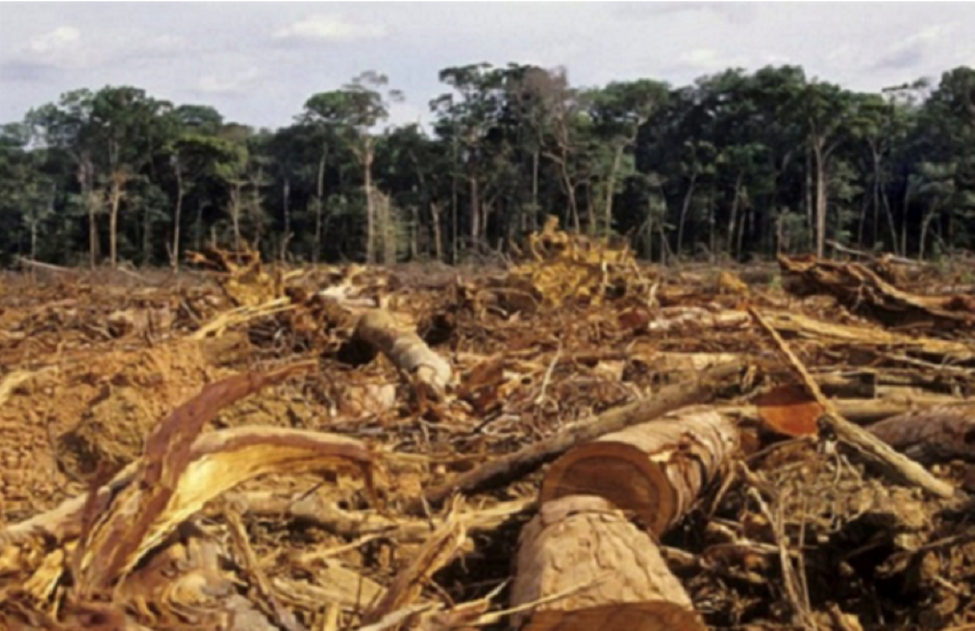
As in the Amazon forest, Iran is experiencing the progressive loss of its forested areas. This jeopardizes the country’s future with serious consequences for the entire planet. In a country such as Iran which its forest ratio to the land surface is minimal, the preservation of forest lands creates even greater necessities for its care, maintenance and afforestation. Therefore, tree logging must be performed with absolute compulsiveness for benefiting now and continuous benefits in the future.
Iran’s forested area since its first survey of 1900 till 2012, forest acreage decreased from 19 million hectare to 14.4 million, shrinking further to 10.7 million by 2015. In a century, Iran has lost almost half of its forested area. The seriousness of the problem goes beyond that, affecting the entire Middle Eastern countries.
Although there is no precise data about forest areas in Iran, different estimations from various national and international organizations demonstrate that forests of the country are experiencing a significant decreasing trend. The Food and Agriculture Organization of the United Nations (FAO) has a different set of criteria for defining forest and accordingly has recognized some 11 million hectares of forests in Iran, covering some 6.5 percent of the country’s total land area.
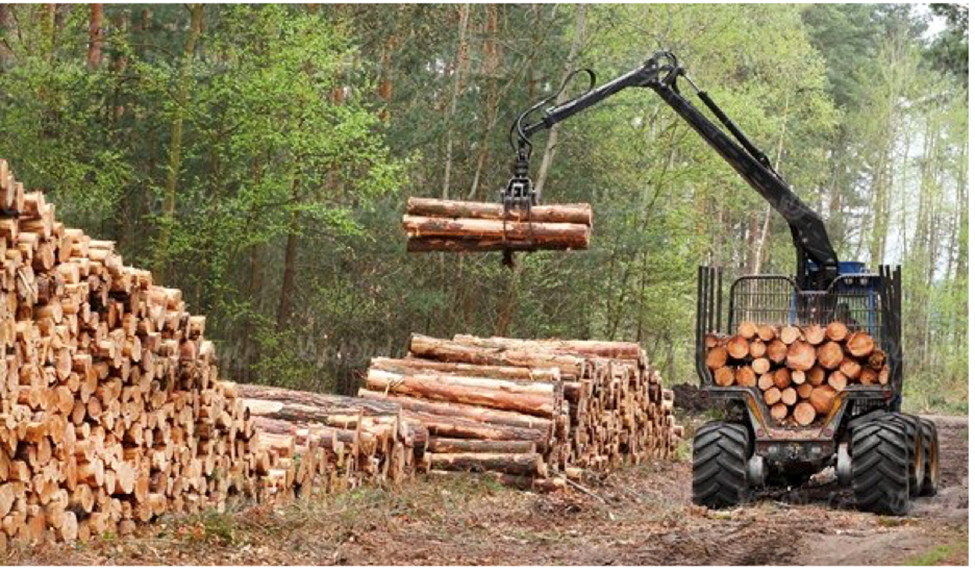
Iran’s forests cover approximately the same amount of land as its agricultural area—about one-tenth of its total surface area differing from 6.5%-8.4%, according to different institutions’ data. The largest and most valuable woodland areas are in the Caspian region, where many of the forests are commercially exploitable and include both hardwoods and softwoods. Forest products in Iran include plywood, fiberboard, and lumber for the construction and furniture industries.
The natural forest ecosystems in Iran consist of a broad range of climatic and geographical conditions, amongst them are the original old-growth Northern forest covers (located chiefly on northern slopes of Alborz Mountains) in the three provinces of Guilan, Mazandaran and Golestan. These forests are an unparalleled source of genetic variation, biodiversity, commercial wood products and various environmental services. They are specifically situated in a region associated with specific natural, climatic and socio-economic attributes.
The presence of approximately 146 endemic woody species, the diverse range of climatic conditions over the approximately 900 × 70 km2 expansion and extensive wildlife habitat, highlight the importance of the original northern forests of Iran, also called the Hyrcanian forests.
The Hyrcanian Forests consist of mixed broadleaf deciduous species. Commercial harvesting operations are carried out in northern forests, while all other forests in Iran are non-commercial.
The scientific forestry planning started nearly 70 years ago with the introduction of shelterwood and selection methods. Two main silvicultural systems introduced in the Hyrcanian Forests are the shelterwood and selection systems. Both systems emphasize natural regeneration; the shelterwood system is trying to regenerate even-aged stands and the selection system is used in uneven aged stands.
There is a history of forest resource management plans (FRMPs) now for many years in Iran. However, many environmentalists and forestry experts have pointed out, the FRMPs are far from satisfactory. They are referring to several reasons for this failure. First, the financial resources allocated to these plans are being used for other purposes. Second, the inputs and supplies needed for effective forest management interventions were not in place in a timely manner. Third, the forest management in the area is far from being decentralized.
The beneficiaries and practitioners believe that forest-dwellers play a weak role in forest management interventions. Factor analysis revealed that in western Iran forests, three main factors influencing the Zagros forest management effectiveness. Those factors are: The management capabilities of forest-dwellers, the professional capabilities of practitioners in forest management and the lack of public support for forest-dwellers. The correlation analysis revealed that all three factors are positively and significantly associated with the success of the government’s forestry programs. Accordingly, the main recommendation of this study was to reformulate forest management policies in the Zagros area by highlighting participatory approaches, not only as a tool, but also as a goal of FRMPs.
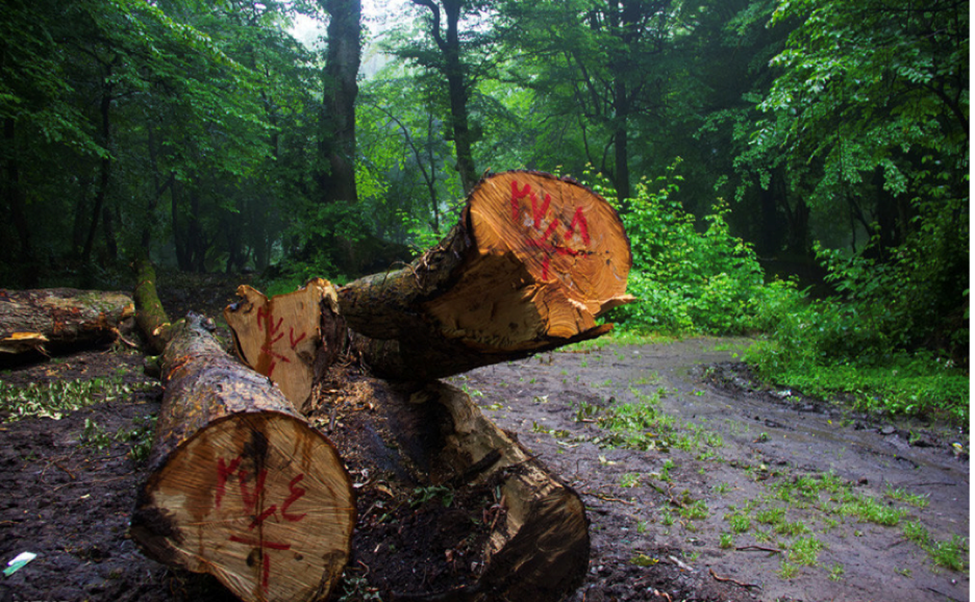
The existence of different land-uses, increasing alteration of forest lands, mainly by local communities and non-local influence, historical mismanagement of natural resources over long periods of time, intensive and irregular tourism and shortage of human as well as financial resources for sustainable monitoring and management of the forest resources are threatening the existence of the Caspian forests. More recently, plans for industrial development, establishment of industrial towns adjacent to the forested areas, public roads construction without detailed regards of environmental considerations have been added to the long list of activities threatening the environment of the Caspian forests.
Different statistics have been presented for the surface area and percentage of the Caspian forests. Amongst the reported data are the initial 3600000 ha surveyed in 1942, 3400000 ha in a study carried out in 1964 and 1920000 ha published in 1990. The area of Hyrcanian Forests is 1.2% of the whole country which comes up to 1648195 ha. The accuracy and reliability of the published data have always been critically discussed, however, regardless of its accuracy, it is obvious and remains a fact that the forest resources in Iran have been continuously degraded over the last few decades and its acreage has declined.
According to the reports in 2007 of forests, range and watershed organization of Iran during the last decades, the Hyrcanian forests surface in northern Iran have 11% decreased due to lack of appropriate management, corruption and multiple controversial decision making bodies.
Forest management officials have acknowledged the fact that the Hyrcanian forest area is declining. They have initiated actions for sustainable management of the Caspian Forests. Different forms of management schemes are planned for implementation, such as documenting and exhibiting the forest disturbance, supervision and management of the remaining natural forest ecosystems in the region. However, their success rate with the existing corrupt political system is in doubt.
A number of factors have fueled deforestation in Iran in recent years. Some are due to the country’s aggressive pursuit of economic development, others are engagement of non- forestry educated officials and stakeholders, construction, illegal logging, overgrazing and human induced wildfires. The change in land use and the mismanagement of forest harvesting have exacerbated the problem as well. Inappropriate development plans, such as building irrelevant dams and changing hydrologic systems, power lines, highways, and mining have compounded the issue. Indeed, little attention has been paid to the consequences on the nature of such activities. Pervasive corruption has also made matters worse. Environmental degradation has become in general a major issue in Iran. Therefore, it is a source of economic hardship, ill health, social disruption, and recent political protests. Climate change has been a factor in this deterioration as well, but so has mismanagement of the country’s once-ample natural resources play a role. It is essential for the government to effectively address these issues, for the sake of Iranians’ well-being and the government’s own lagging legitimacy, however, the whole governance system is inherently incapable of acting
Following the 1979 Revolution, the competence of the department of environment (DOE) deteriorated. Given Iran’s other pressing domestic and regional challenges, the DOE suffered greatly from minimal budgets—and from incompetent, and certainly corrupt management.
Game-animal and bird populations have been decimated for the past decades. Domestic sheep herds encroach and overgraze the rangelands, leading to erosion and desertification, decreased soil productivity, and invasion of harmful plant species.
Since the revolution, Iran’s forests have been the victims of increased degradation. About one million hectares of the ecologically rich Zagros forests have been lost according to the deputy head of Iran’s Forests, Range and Watershed Management Organization which he claims is due to climate change.
Designated government agencies to protect, enforce laws and forest related regulations in Iran are weak, corrupt and underfunded. Individuals cut trees at will, and sometimes start forest fires to create more farming land.
According to the Center for International Forestry Research: Excessive clearing or thinning of forests can destabilize the world’s climate by releasing into the atmosphere millions of tons of greenhouse gases normally stored in wood in the form of carbon. This act severely affects the atmosphere, leads to global warming and eventually climate change. The carbon storing of forests provides major environmental benefits while reducing global warming.
Population dynamics, deforestation, and overgrazing are main causes of natural ecosystems degradation. Thereafter, comes salinization, alkalization, water-logging, soil erosion, and desertification as main effects of human-induced soil degradation. These are a few consequences of human interference with nature.
Population in urban areas of Iran has rapidly increased from 1936 (21% of total population) to 2010 (72% of total population). Nearly 5 million hectares of forest were converted to farmland and urban areas from the 1950s to 2008. Iran’s cultivated land has increased by more than four times. The livestock population is around three times higher today than the carrying capacity of the rangelands.
There are historically more animal units grazed on rangelands beyond their carrying capacity. Rangelands can in an optimal condition support the feeding of only 37 million animal units for a period of seven months in Iran, while today 83 million animal units are grazing on the rangelands. Therefore, the principal reasons for rangeland degradation in Iran is overgrazing and overstocking. Again, unsustainable application is an inevitable consequence, which in turn causes declining trends in pastures, transformation of good pastures into poor ones and of the latter into non-productive pastures.
Over the years, the condition of rangelands have worsened. Results of a recent survey shows that rangelands are 85 percent of Iran’s area, 84.8 million ha, equivalent to 51.4 percent. It has been argued that only 9.3 million ha of pastures (10.3%) are in good condition, 37.3 million ha in moderate condition (41.4%) and the remaining 43.4 million ha, have poor condition (48.3%).
The costs of rangeland degradation are estimated by the loss in dry matter resulting from the decline of rangeland quality. Annual loss of dry matter is estimated at 110 million kilograms dry matter, which represents a net value of about US $172 million (equivalent to IRR 1,373 billion or 0.15 percent o f GDP).
Much more could be said about the degradation of the environment in Iran. However, first and foremost the environmental crisis in Iran is a state made disaster in contrary to the expression of various national and international experts who want to tie the Clerical Regime’s incompetencies, mismanagement and corruption to the US, European and others sanctions regime or global warming, temperature change and droughts. Those experts claiming such issues neither know their subject matter nor they have known the dynamics dominating the Clerics rule.
The questions such experts should initially respond are what percentage of forests has the Clerical Regime improved during years of their reign? What water resources have been developed? Does Iran need so many dams? Are construction of these dams sustainable? Why are the Iranian plains sinking? Why is Iran experiencing so many sinkholes? What are the rangelands’ state and too many other related questions?
The majority of Iran’s economy, especially the construction and infrastructure sectors, is under the monopoly of institutions such as Khatam-al Anbiya Construction, which is part of IRGC under absolute authority of the Supreme Leader Ali Khamenei. Their dominance in the economy is so intensive that even some top officials raised dissatisfaction.
According to Transparency International’s annual corruption report, Iran is ranking 138 among 180 countries surveyed. To put this issue into context, some reports have claimed that firms associated with the IRGC have been constantly lobbying consecutive governments in Iran to gain contracts and build disproportionate numbers of dams throughout the country, despite the fact that the majority of the dams are not fully operating due to insufficient precipitation.
When checking the online database of Iran’s Energy Ministry, most of the data regarding the majority of dams’ projects is missing. Among more than 1,000 dams, only about 100 had complete, yet questionable, information.
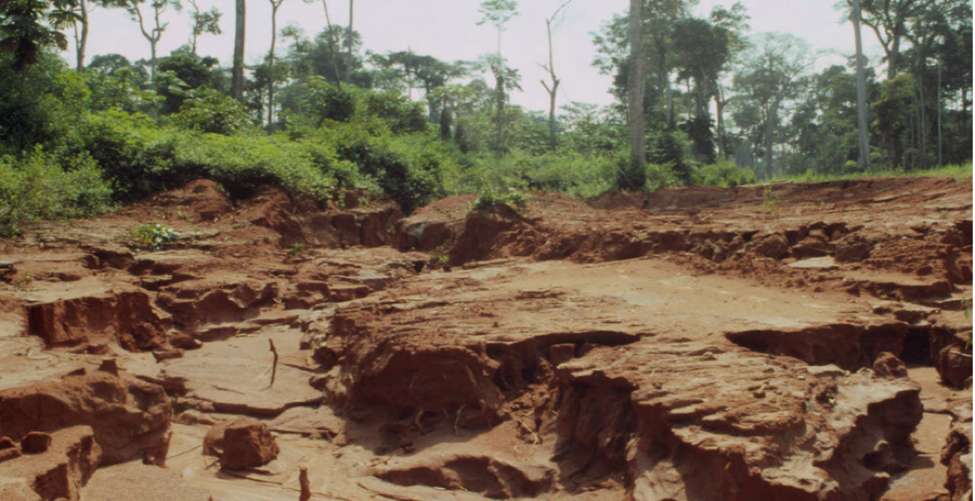
Despite the numerous dams being constructed, devastating floods have increased during recent decades in Iran. The number of floods recorded in the 1980s and 1990s is more than five times the number recorded in the 1950s and 1960s. Poor land management and deforestation has contributed to an increase in the frequency and intensity of floods. Identifying the causes of floods is clearly very complex. However, allocating a damage cost to the responsibility of manmade activities in flood occurrence is not difficult. It is believed that the dramatic increase in the number of floods over the last four decades in Iran is closely related to increased deforestation, vegetation removal and rangelands degradation, which has taken place over the same time period. Assuming that 4/5th of the increase in floods is related to manmade activities which would sum up in annual damage costs estimated at about billions of US dollars. Looking at every aspect of such damage, IRGC, foundations and institutions under the control of Supreme Leader has caused a lion share of it considering theirs vast economic activities dominance.
* Khalil Khani is an Environmental Specialist and a Human Rights activist. He holds a Ph.D. in Ecology, Botany, and Environmental Studies from Germany and has taught at the University of Tehran and the Hesse State University in Germany. He is also a Doctor of Medical Psychology from the United States.